1. The Silent Killer of Excavator Undercarriage
Every construction or excavation professional knows the feeling of finishing a long shift in wet, sticky, or clay-heavy ground. You park your machine, maybe give it a quick walk‑around, and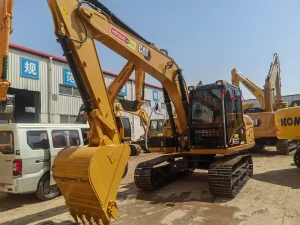 head home. The mud caked between the track links and around the sprockets, idlers, and carrier rollers seems harmless – just dirt, after all. But that “dead mud” is far from harmless. Over weeks and months, it becomes the single most destructive force for your undercarriage components, especially the small wheels (rollers and idlers) that keep your tracks moving smoothly.
This article is not about theoretical maintenance. It is about a simple, five‑minute habit that can double the service life of those expensive little wheels – from an average of 2,000 hours to over 4,000 hours. For owners of used excavators and other machinery, this practice is even more critical because pre‑owned equipment often arrives with hidden undercarriage wear. By spending just 300 seconds after each shift to dig out the compacted mud, you protect not only your track system but also the final drives, track frames, and even the machine’s overall stability.
We will explore why mud accumulation is so damaging, how it accelerates wear on specific components, and exactly how to perform this five‑minute cleaning ritual correctly. No special tools, no expensive chemicals – just a bar, a scraper, or even a sturdy stick. The result? Your “little wheels” – the track rollers, carrier rollers, and front idlers – will thank you with two extra years of reliable service, even under harsh conditions.
2. The True Cost of Ignoring Mud in Excavator Tracks
2.1 How Dead Mud Becomes an Abrasive Paste
When you operate an excavator in wet soil, clay, or loam, the material enters the gap between the track links, around the bushings, and into the cavities where the rollers and sprockets engage. As the machine sits overnight, this mud dries and compacts. The “dead” mud is no longer soft soil; it becomes a concrete‑like mass that is extremely hard and abrasive. The moment you start the excavator the next day, that dried mud grinds against every moving undercarriage part.
For used excavators, the situation is worse. Previous owners may have neglected regular cleaning, leaving layers of compacted mud that have already started to wear down the roller flanges and idler surfaces. When you buy a used machine, you rarely know the full cleaning history. Starting a disciplined post‑shift cleaning routine immediately can stop further damage and preserve what remains of the undercarriage life.
2.2 The Mechanical Sequence: From Mud Pack to Metal Failure
Let us trace the damage chain. First, mud packs between the track link rails and the roller treads. As the track rotates, this compacted material acts like sandpaper, gradually reducing the diameter of the roller tread. A new track roller has a precise profile; once that profile is worn down by just 3‑4 mm, the roller can no longer guide the track properly. The track starts to wander, causing uneven wear on the sprocket teeth and bushing ends.
Second, mud accumulates around the seal areas of the rollers and idlers. These seals keep lubricant inside and contaminants out. When dried mud presses against the seals, it can deform them or create tiny gaps. Then fine silt enters the bearing cavity, and roller failure follows within 100‑200 operating hours. A single failed track roller on an excavator costs between 150and400 for parts alone, plus labor. A full set of bottom rollers (six to eight per side) can exceed $2,500.
Third, mud trapped inside the track link gaps forces the links apart slightly, increasing pitch length. A stretched track pitch accelerates sprocket tooth wear and can lead to track derailment. Derailment on an excavator working on a slope is a serious safety hazard.
2.3 Why “Other Machinery” Suffers the Same Fate
This problem is not exclusive to excavators. Other machinery such as bulldozers, compact track loaders, crawler cranes, and forestry skidders all use similar undercarriage systems. The same principle applies: dry, compacted mud is a powerful abrasive. For owners of mixed fleets, applying a five‑minute track cleaning rule across all tracked equipment yields cumulative savings. A dozer’s track rollers are even larger and more expensive than an excavator’s. A single dozer roller can cost over $800. By spending five minutes per machine per shift, you protect thousands of dollars in undercarriage components across your entire fleet.
3. The Anatomy of Excavator Undercarriage “Little Wheels”
3.1 Track Rollers (Bottom Rollers)
These are the small wheels that run along the bottom of the track frame, carrying the machine’s weight. A typical 20‑ton excavator has seven to nine track rollers per side. Each roller consists of a hardened steel tread, two flanges (inner and outer), bearings, and dual cone seals. The most vulnerable part is the tread surface and the seal area. When mud packs around the roller, it presses against the seal guard and can push the seal lip inward. Once the seal fails, lubricant leaks out and dirt gets in. The roller then heats up, seizes, and the outer shell wears through rapidly.
3.2 Carrier Rollers (Top Rollers)
These smaller wheels support the track return section (the top part of the track that does not contact the ground). They are often neglected because they do not carry heavy loads. However, mud thrown up from the lower track can accumulate on the carrier roller brackets and around the roller bearings. Dried mud on a carrier roller can cause the roller to stop rotating, leading to a flat spot. A flat‑spotted carrier roller then grinds against the track chain, creating metal filings that fall down into the bottom rollers, further contaminating them.
3.3 Front Idlers
The front idler is the large wheel at the front of the track frame that guides the track and works with the track adjuster. While it is larger than the “little wheels,” it suffers from mud packing in the same way. Mud accumulates in the cavity behind the idler, between the idler rim and the track links. When that mud hardens, it prevents the idler from moving back and forth (for track tension adjustment) and can cause the idler to run eccentric, wearing out the idler bearing and bushing. A failed front idler is a major repair, often costing 1,200to2,500 for a used excavator.
4. Why a Five‑Minute Daily Cleaning Is Superior to Weekly Deep Cleans
Many operators think that a thorough pressure washing once a week is enough. That is a mistake. The damage happens in the first few hours after the mud dries. Once the mud has turned into a hard, abrasive cake, every rotation of the track causes wear. Waiting five days until the weekend pressure wash means the undercarriage has already experienced dozens of hours of grinding.
A five‑minute post‑shift cleaning removes the mud while it is still wet or only partially dried. Wet mud is soft and can be easily dislodged with a scraper or even by running the tracks briefly over a clean, hard surface. The goal is to prevent the formation of that concrete‑like block. This is the same principle used in high‑hour mining operations: they clean undercarriages every shift, not every week. For owners of used excavators, where undercarriage life is already partially consumed, this daily habit can restore up to 30% of remaining life simply by eliminating unnecessary abrasion.
4.1 Time Efficiency: What You Can Do in 300 Seconds
Let us break down the five minutes realistically:
-
Minute 1: Park the excavator on level, dry ground (concrete pad or packed gravel is ideal).
-
Minute 2: Use a long‑handle scraping tool (a worn bucket tooth welded to a bar works perfectly) to remove mud from between the track links. Focus on areas where the track contacts the rollers.
-
Minute 3: Scrape the area around each bottom roller – both sides of the roller. Pay attention to the gap between the roller flange and the track link.
-
Minute 4: Clear mud from the front idler cavity and the rear sprocket area. Use a smaller hooked tool for tight spots.
-
Minute 5: Rotate the tracks forward about half a meter (by slowly driving the excavator) and repeat the scraping on the newly exposed sections. Then rotate backward and check again.
That is it. No chemicals, no pressure washer, no crawling underneath with a pickaxe. After this quick routine, any remaining mud is too thin and loose to cause significant abrasion.
4.2 The Science of Abrasion: Hardness and Pressure
Dried clay can have a Mohs hardness of 3‑4, while hardened steel used in track rollers is typically 45‑55 HRC (equivalent to Mohs 5‑6). The problem is not that mud is harder than steel; it is that the combination of high contact pressure (up to 50 MPa at the roller‑track interface) and the abrasive particles (silica and quartz in many soils, hardness Mohs 7) creates three‑body abrasion. The mud acts as a carrier that holds these hard quartz particles exactly where they do the most damage. Removing the mud removes the abrasive carrier.
5. Step‑by‑Step: The Proper Five‑Minute Post‑Shift Cleaning Routine
This section provides a detailed, actionable procedure. No special tools are required, but having the right tool makes the job faster and safer.
5.1 Preparation and Safety First
-
Park on level ground – Never attempt track cleaning on a slope. The machine could roll or the track could release tension unexpectedly.
-
Engage the parking brake and lower the bucket or attachment to the ground for stability.
-
Turn off the engine – Do not clean tracks with the engine running unless you have a remote controlled track rotation system (very rare). Moving tracks can catch your tool or hand.
-
Wear heavy gloves – Dried mud can have sharp embedded stones or metal fragments.
-
Use a tool with a long handle – Keep your hands at least 30 cm (12 inches) away from the track and roller pinch points.
5.2 Tool Selection
You do not need a catalog item. The best tools are often shop‑made:
-
Flat bar scraper – A 50 cm (20 inch) length of 5 mm thick flat steel, with one end ground to a chisel edge.
-
Hooked mud pick – An old excavator tooth or a piece of rebar bent into a J‑shape, useful for pulling mud from behind idlers and around sprockets.
-
Stiff bristle brush (optional) – For final loose debris after scraping. Avoid wire brushes as they can damage seals.
If you own other machinery like dozers or loaders, keep a dedicated scraper for each machine type – dozer tracks are wider, so a longer scraper is needed.
5.3 The Actual Cleaning Sequence
Step A – Exterior link cleaning
Start at one end of the track (front idler) and work toward the rear sprocket. Insert the flat scraper between the track link rails (the vertical plates of each link). Scrape outward, pulling the mud from between the links. You will see chunks of hard mud falling away. Do not pry sideways – use a straight pulling motion.
Step B – Roller tread clearance
For each bottom roller, locate the small gap between the roller’s outer flange and the track link. Insert the scraper tip at an angle and lever out the packed mud. Rollers often have a “mud relief” groove on their tread – keep that groove open. A clear groove means the roller can self‑clean to some degree during operation.
Step C – Carrier rollers (top rollers)
Use a hooked tool or your flat scraper to reach up to the top rollers. The mud here is usually drier and harder because it is not constantly wetted by ground moisture. Break it away from the roller’s sides and from the bracket that holds the roller.
Step D – Front idler cavity
The area behind the front idler, where the track adjuster cylinder sits, is a notorious mud trap. Use the hooked tool to pull out packed mud. If this cavity is completely filled, the idler cannot slide back to maintain proper track tension. A frozen track adjuster is a common failure on used excavators that have never had this cleaning step.
Step E – Rear sprocket area
Mud accumulates between the sprocket teeth and also on the inside face of the sprocket (where the track chain wraps). Scrape between every few teeth. If you see mud that has turned into a hard ring around the sprocket hub, break it off. That ring can push the track chain sideways, causing the chain to ride on the sprocket flange instead of the tooth root.
Step F – Track rotation and repeat
Start the engine, raise the tracks off the ground (if safe and if the machine has a boom that can lift the track frame – not always possible). Alternatively, simply drive the excavator forward half a meter and stop. Repeat steps A through E on the newly exposed sections. Then reverse half a meter and check again. This ensures you clean the entire circumference of the track.
5.4 What About Pressure Washing?
Pressure washing is effective but not a replacement for this five‑minute scrape. High pressure can force water past seals, causing more harm than good. Also, pressure washing requires setup (hoses, pressure washer, water source) and takes 15‑20 minutes. The five‑minute scrape is something you can do with a tool that lives on the machine. Use pressure washing once a week for a deeper clean, but do the daily scrape regardless.
6. How This Simple Habit Extends “Little Wheel” Life by Two Years
6.1 Quantifying the Benefit
Let us use realistic numbers. A tracked excavator in construction or land clearing works an average of 1,500 hours per year. An undercarriage’s “little wheels” – bottom rollers – typically last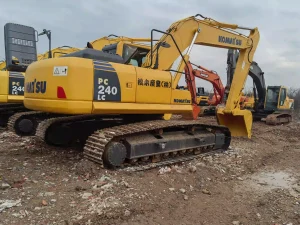 between 2,000 and 3,000 hours in abrasive soils without daily cleaning. With daily post‑shift mud removal, roller life often extends to 4,000‑5,000 hours.
That is an extra 2,000 to 3,000 hours of life. At 1,500 hours per year, that is 1.3 to 2.0 extra years of service. Hence the claim: “two more years” is conservative. Many operators report that their undercarriage rollers lasted through the entire life of the track chains, something rarely seen without disciplined cleaning.
For used excavators, the math is even more compelling. A used machine may have 60% of its undercarriage life remaining. If you skip daily cleaning, you will consume that 60% in, say, 1,200 hours. With daily cleaning, you might get 2,000 hours from the same remaining life. That is 800 extra hours – free.
6.2 The Domino Effect on Other Components
Healthy track rollers and idlers reduce shock loads on the final drive. The final drive motor and planetary gears are among the most expensive components on an excavator (often 5,000‑15,000 for a used replacement). When rollers become lumpy or seized, the track chain vibrates and pounds on the final drive output shaft, leading to premature bearing failure.
Also, clean tracks require less track tension adjustment. Over‑tight tracks wear out rollers and sprockets faster; loose tracks increase the risk of derailment. By keeping the undercarriage free of mud, you maintain consistent track tension because the mud is not artificially pushing the track links outward.
6.3 Realistic Expectations: Not a Miracle, But a Proven Practice
Daily cleaning will not make worn‑out rollers new again. If a roller already has a flat spot or a leaking seal, cleaning won’t fix that. However, for rollers that are still in good condition, cleaning prevents the conditions that cause premature failure. It is a preservation method, not a repair method.
For owners of other machinery like compact track loaders (CTLs), the same principle applies. CTL undercarriages have smaller rollers that are even more susceptible to mud packing because the track is narrower. A five‑minute cleaning for a CTL after working in mud can double the life of the roller bearings.
7. Integrating Track Cleaning Into Your Daily Shutdown Procedure
7.1 Building the Habit
The most effective maintenance routines are those that become automatic. Here is how to make five‑minute track cleaning a non‑negotiable part of your shift end:
-
Anchor it to an existing habit – For example, after you lower the bucket to the ground and before you turn off the engine, you grab the scraper.
-
Keep the tool accessible – Weld a small pipe holder to the excavator’s handrail or keep the scraper in the cab’s tool cubby.
-
Set a timer – For the first two weeks, use a phone timer set to five minutes. You will quickly learn that the job rarely takes longer.
-
Inspect while you clean – Use those five minutes to also look for loose track bolts, cracked links, or leaking roller seals.
7.2 Dealing With Extreme Conditions
In sticky clay or wet conditions, mud may be too soft to scrape cleanly. In that case, simply run the excavator for 30 seconds on a dry, hard surface (concrete pad or crushed rock) before parking. The track flex and vibration will shed most of the wet mud. Then scrape off the remaining 10‑20% that stays stuck.
In freezing conditions, wet mud can freeze solid inside the tracks overnight. If you park with wet mud and temperatures drop below freezing, the expanding ice can crack track link bushings or even bend roller flanges. Cleaning before the freeze is critical.
7.3 Training Your Crew
If you manage a fleet of used excavators and other machinery, train every operator to perform this five‑minute cleaning. Make it part of the operator’s daily log – a check box that says “post‑shift track mud removed.” Do not rely on a single night shift cleaner; the operator knows where the machine worked and where the mud is packed worst.
Provide each machine with its own cleaning tool. Label the tool with the machine number. This prevents tools from being lost or borrowed.
8. Common Myths About Excavator Track Cleaning
8.1 “Running the tracks fast will fling off the mud”
False. High‑speed track rotation (if the excavator has a high‑speed travel mode) can throw off some surface mud, but the packed mud inside link cavities and around rollers is compressed and will not come out by centrifugal force. In fact, high‑speed travel with mud inside increases wear because the abrasive particles move at higher velocity across metal surfaces.
8.2 “Only the sprocket and idler matter; rollers are cheap”
Rollers are not cheap. A set of eight bottom rollers for a 20‑ton excavator costs 1,500‑2,500. A set of carrier rollers adds another 400‑600. That is comparable to the cost of a new set of track chains. And replacing rollers is labor‑intensive – often 4‑6 hours per side because you must lift the track and remove it to access roller bolts.
8.3 “Used excavators already have worn undercarriages, so cleaning doesn’t help”
This is exactly backwards. A used excavator’s undercarriage is closer to its wear limit than a new one. Any additional preventable wear pushes it over the edge faster. By cleaning daily, you extract every possible hour from the remaining life. For a used machine that you plan to resell in two years, a clean undercarriage with functional rollers and idlers adds 2,000‑5,000 to the resale value.
8.4 “Pressure washing once a month is enough”
As explained earlier, the damage occurs daily. A monthly pressure wash means the undercarriage is grinding on dried mud for 20‑30 shifts between washes. That is hundreds of hours of accelerated wear.
9. Advanced Tips for Maximizing Undercarriage Life
9.1 When to Replace vs. When to Clean and Keep
Even with daily cleaning, rollers eventually wear out. Know the replacement indicators:
-
A roller that is visibly flattened on one side (flat spot)
-
A roller that leaks oil or grease from the seal
-
A roller that makes a grinding noise when the track rotates
-
A roller that has a loose outer shell (wobbles sideways)
Replace these immediately. A failed roller can damage the track chain and sprocket. But for rollers that are still round and sealed, cleaning keeps them that way for much longer.
9.2 Using Track Pads and Their Effect on Mud Accumulation
Rubber track pads (often fitted to used excavators for road work) can trap mud between the pad and the link. This mud is hidden and can corrode the pad bolts and the link surface. After cleaning, use a thin scraper to go between the pad and the link. Do not bend the pad aggressively – rubber can tear.
9.3 What About Other Machinery With Different Track Designs?
-
Bulldozers have larger, wider tracks with more space between links. Mud still packs, but a dozer’s track rollers are huge and expensive. The five‑minute rule applies, but you may need a wider scraper.
-
Compact track loaders have small, high‑speed tracks. Their rollers are smaller and have less robust seals. Daily cleaning is even more critical for CTLs.
-
Crawler cranes have very heavy undercarriages and often work in clean environments (concrete, packed gravel). But if they work in soil, the same mud packing occurs.
In all cases, the principle is identical: remove dead mud before it hardens.
9.4 Lubrication After Cleaning?
Do not lubricate the outside of rollers or tracks. Grease on the roller tread attracts dirt and makes a grinding paste. The only lubrication required is the sealed grease inside the roller bearings – and that is not user‑serviceable. If you feel the need to protect against rust on exposed metal, a light spray of water‑displacing fluid (like WD‑40) on the roller flanges is acceptable, but avoid getting it on rubber seals.
10. Conclusion: Small Daily Investment, Major Long‑Term Return
We have covered the mechanics, the step‑by‑step procedure, the myths, and the economics. The message is simple: spending five minutes after each shift to scrape dead mud from your excavator’s tracks will significantly extend the life of the track rollers, carrier rollers, and front idlers – the “little wheels” that keep your machine moving. For owners of used excavators, this habit is a low‑cost way to maximize the remaining value of their investment. For fleets that include other machinery such as dozers, loaders, and crawlers, applying the same discipline across all equipment multiplies the savings.
The two‑year extension is not an exaggeration. It is a realistic expectation based on wear rate comparisons between machines that receive daily track cleaning and those that do not. The difference is most visible in abrasive soils – clay, sand, gravel, and rocky loam – where mud acts as a carrier for hard quartz particles.
You already park the machine, lower the bucket, and turn off the engine. Adding five minutes with a scraper is barely noticeable in your daily routine but extremely noticeable on your repair invoices. Track rollers that would have failed at 2,000 hours can easily reach 4,000 hours. At 1,500 operating hours per year, that is 2.6 years of additional service. Even if you only get one extra year, the savings on parts and labor – plus the avoided downtime – are substantial.
Start tomorrow. Make a scraper. Weld a holder on your excavator’s handrail. Train your operators. And watch those little wheels keep turning, shift after shift, year after year. Your undercarriage – and your bottom line – will thank you.